
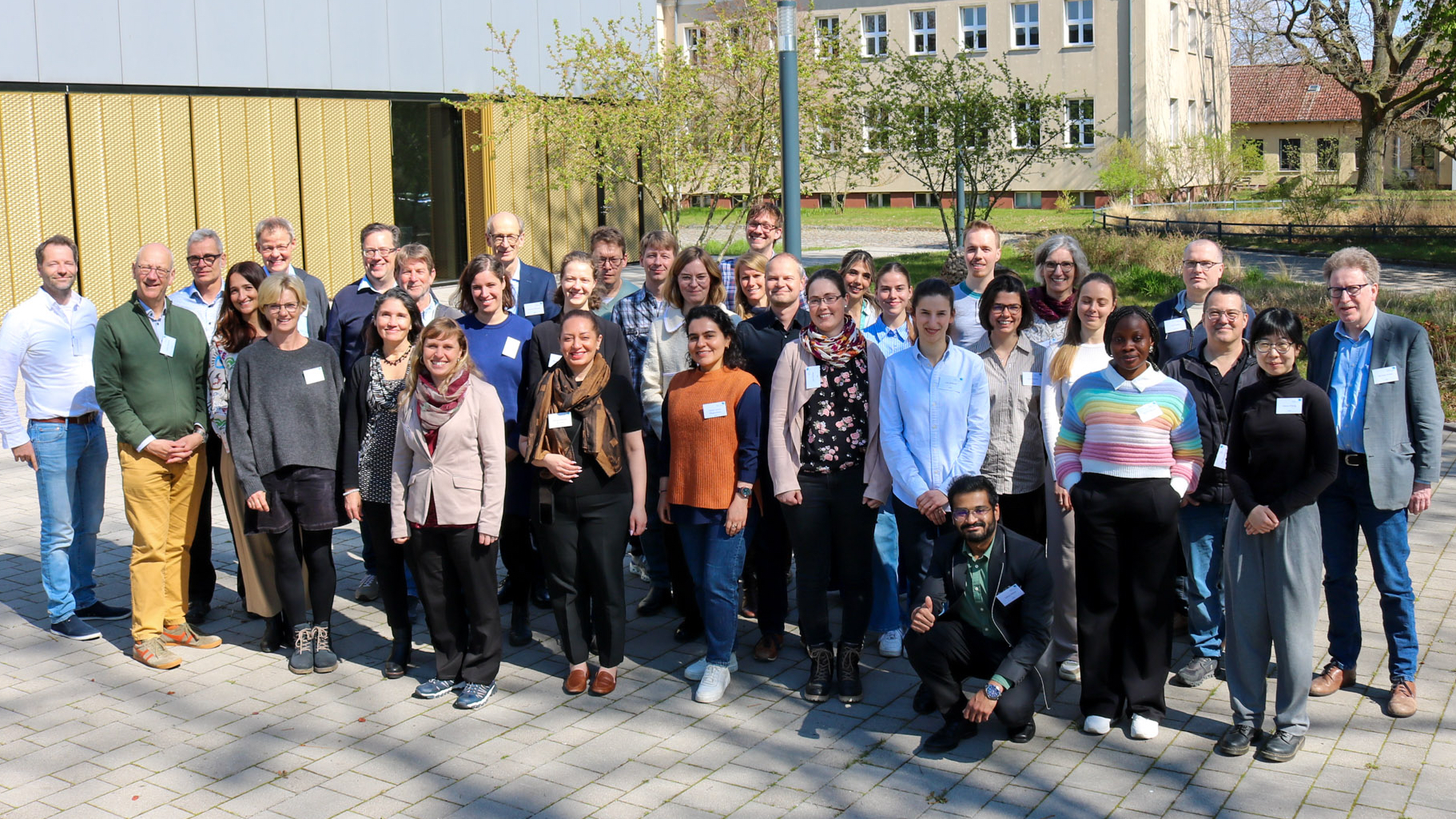
From April 15 to 16, members of research alliance Leibniz INFECTIONS met for their 11th general assembly at the Leibniz Institute for Agricultural Engineering and Bioeconomy (ATB) in Potsdam. The new PhD candidates presented the progress of their projects, and Prof. Thomas Gutsmann became the new spokesperson.
Twice a year, researchers from the network meet to exchange ideas and discuss the progress of their research projects. This time the event was hosted by the Leibniz Institute for Agricultural Engineering and Bioeconomy (ATB) in Potsdam. The institute researches and develops technologies and processes for sustainable, resource-efficient agriculture and the bioeconomy. It combines basic research with practical applications to make production systems along the entire value chain—from crop production and animal husbandry to food and biomaterials—more climate-friendly, efficient, and circular. Prior to the official program, interested participants were given insights into the institute’s work during a 90-minute guided tour, including visits to laboratories and the wind tunnel.
In his opening remarks, long-time spokesperson Professor Ulrich Schaible of the Borstel Research Center, Leibniz Lung Center, emphasized the importance of interdisciplinary approaches to addressing complex challenges such as antimicrobial resistance (AMR)—that is, the ability of microorganisms to withstand antibiotics. After eleven years as head of the network, he handed over the reins to Professor Thomas Gutsmann, who has also been actively involved since the network’s founding in 2015. The general assembly was also attended by the Scientific Advisory Board: two members participated in person, while another joined online.
On the first day of the event, the seven PhD candidates in the network took center stage: They presented their research projects, which are supervised by experts from various disciplines. In discussions with the audience, approaches were refined and perspectives broadened. In a subsequent workshop on science communication, they received input for exciting and accessible presentations and were able to put what they had learned into practice right away.
New associated projects and international collaborations
On the second day, the focus shifted to the interdisciplinary consortium projects as well as associated projects. The latter are externally funded but contribute significantly to the consortium’s overall goal through thematic and methodological complements. Three newly admitted projects (EU-TULIP, OHIS-Zoo, AIRISK) were presented for the first time. In addition, Indian researcher Dr. Tanvi Khera joined the meeting via video conference to present opportunities for collaboration in the field of AMR and sepsis, a life-threatening immune response to infections. Her research focuses primarily on antibody-mediated prevention and the development of immunotherapies against critical bacterial pathogens, including those that cause sepsis.
In subsequent working groups, the participants discussed the status of the seven core projects and jointly determined the next steps. At the concluding plenary session, Professor Christina Hölzel from the University of Kiel, speaking on behalf of the Scientific Advisory Board, made the following statement: “We are impressed by the high quality of the doctoral candidates’ presentations. The projects are convincingly designed. At present, we see no need for any fundamental corrections.” And Thomas Gutsmann emphasized: “The atmosphere here was very open and productive. New ideas emerge precisely when people from different disciplines come together and talk to one another. It is impressive also to see that from these collaborations here new third party funded projects arise.” He announced that there will be a call for proposals specifically for young researchers. Seed funding of up to 25,000 euros will be provided to support projects aimed at initiating innovative approaches, including in science communication.
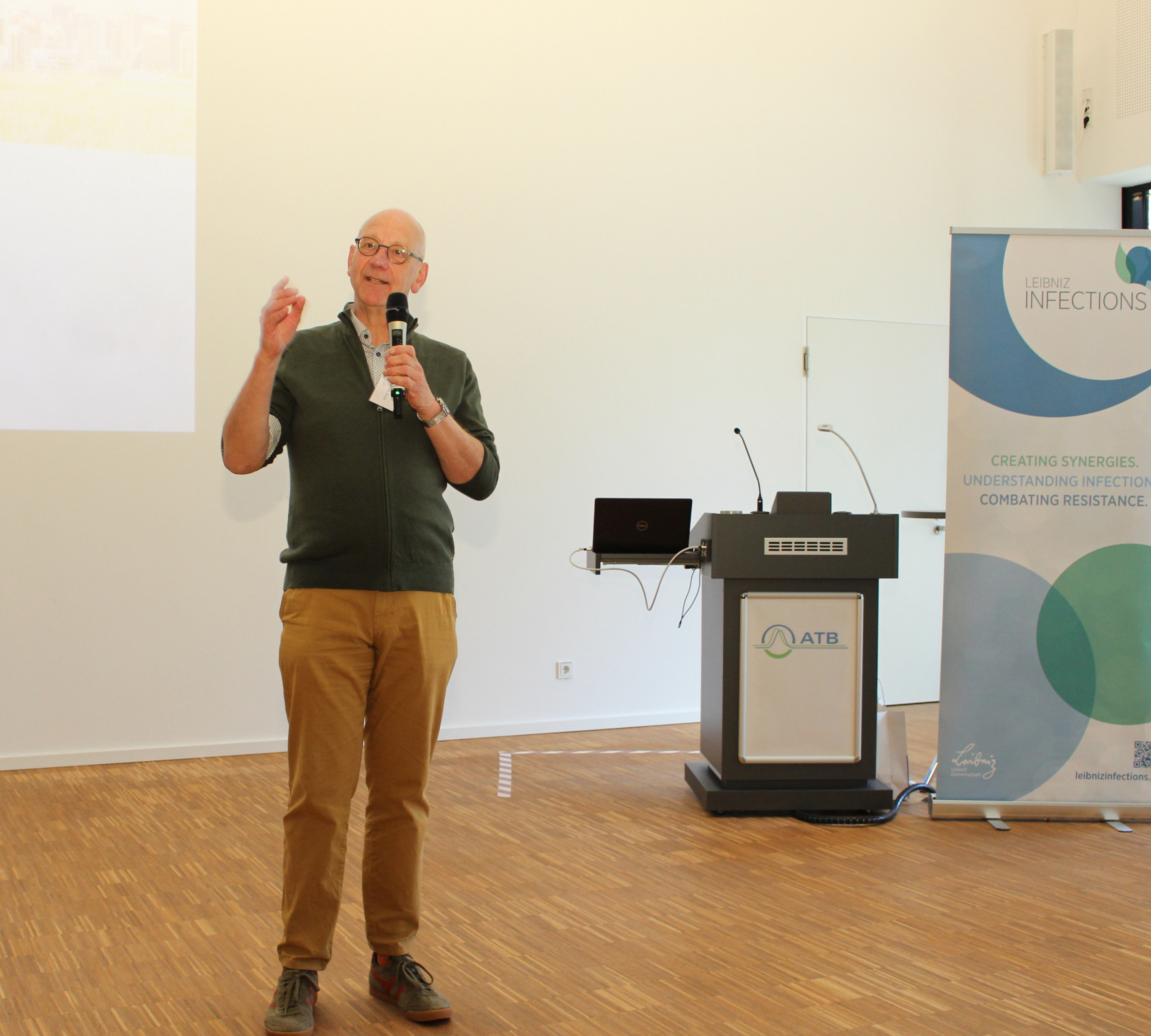 Prof. Dr. Ulrich Schaible, former spokesperson for the Leibniz INFECTIONS research network welcomed the approximately 40 participants to the 11th assembly. ©Kerstin Nees, Leibniz INFECTIONS
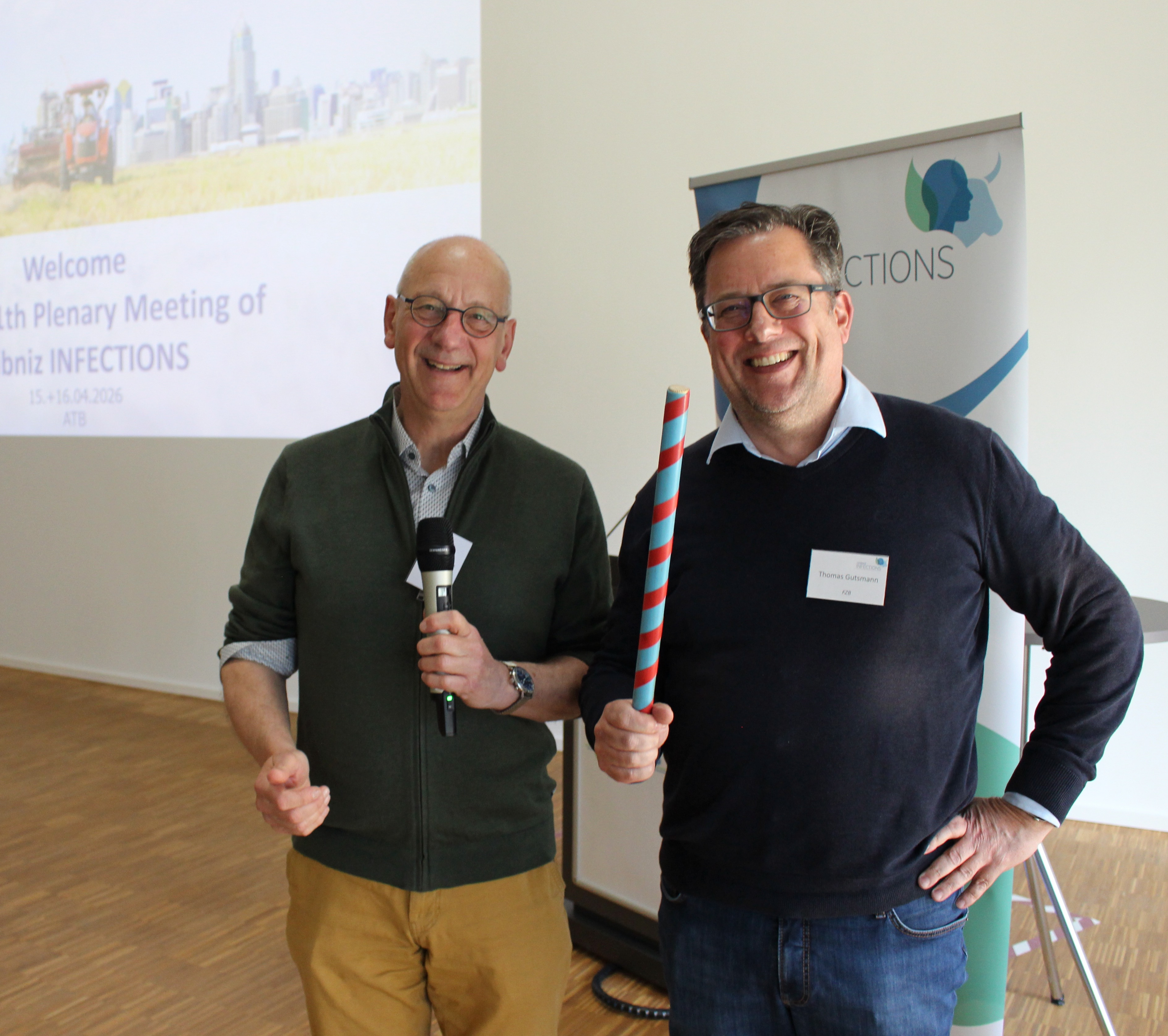 Professor Ulrich Schaible (left) passed the baton to the new spokesperson of the network, Professor Thomas Gutsmann from the Research Center Borstel, Leibniz Lung Center. © Kerstin Nees, Leibniz INFECTIONS
Program for April 15, 2026
| 09:30 | Coffee Chat with Elisabeth (PhD-Students only) |
| 10:30 | Welcome & Guided Tour of the ATB (optional) |
| 12:00 | Lunch |
| 13:00 | Opening & Welcom |
| 13:10 | Introduction of ATB |
| 13:20 | Progress reports of IPT7, IPT8, IPT9 |
| 14:20 | Coffee Break & Group Picture |
| 14:45 | Prograss reports of IPT10, IPT11, IPT12, IPT13 |
| 16:10 | End of today's plenary program |
| 16:20 | Coffee Break |
| 16:30 | Workshop for PhD-Students "How to present your research in one minute" |
| 16:30 | Steering Comittee Meeting |
| 19:00 | Get together at Restaurant Loft |
Program for April 16, 2026
| 09:00 | Associated projects (overview, introduction of possible projects and collaboration, reports of AP1, AP7 |
| 10:00 | Coffee Break |
| 10:15 | 1. Group sessions (IPT8, IPT9, IPT10, IPT13) |
| 11:15 | Group switch |
| 11:30 | 2. Group sessions (IPT7, IPT11, IPT12) |
| 12:30 | Coffee Break |
| 13:00 | Plenary meeting |
| 13:30 | Lunch |
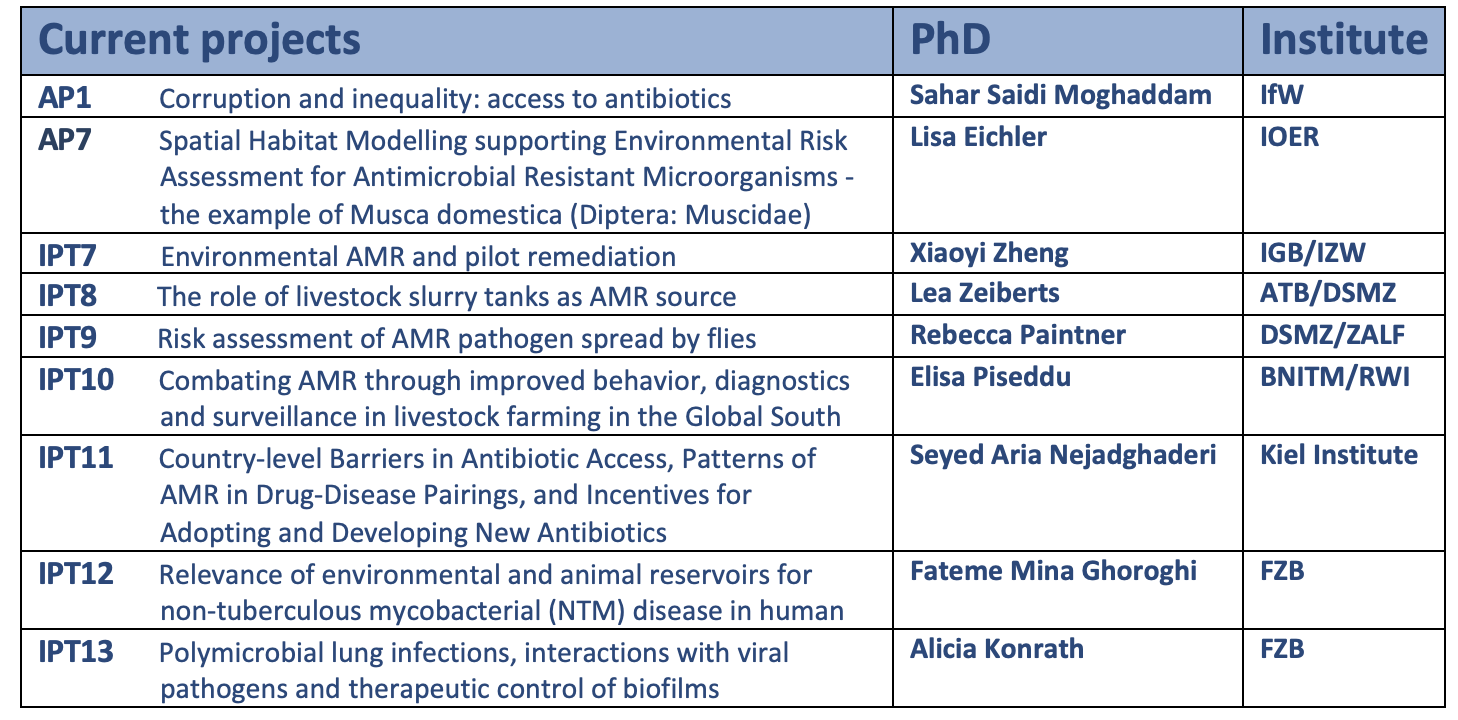 The interdisciplinary project teams (IPT) are investigating the spread of AMR from various sources.