
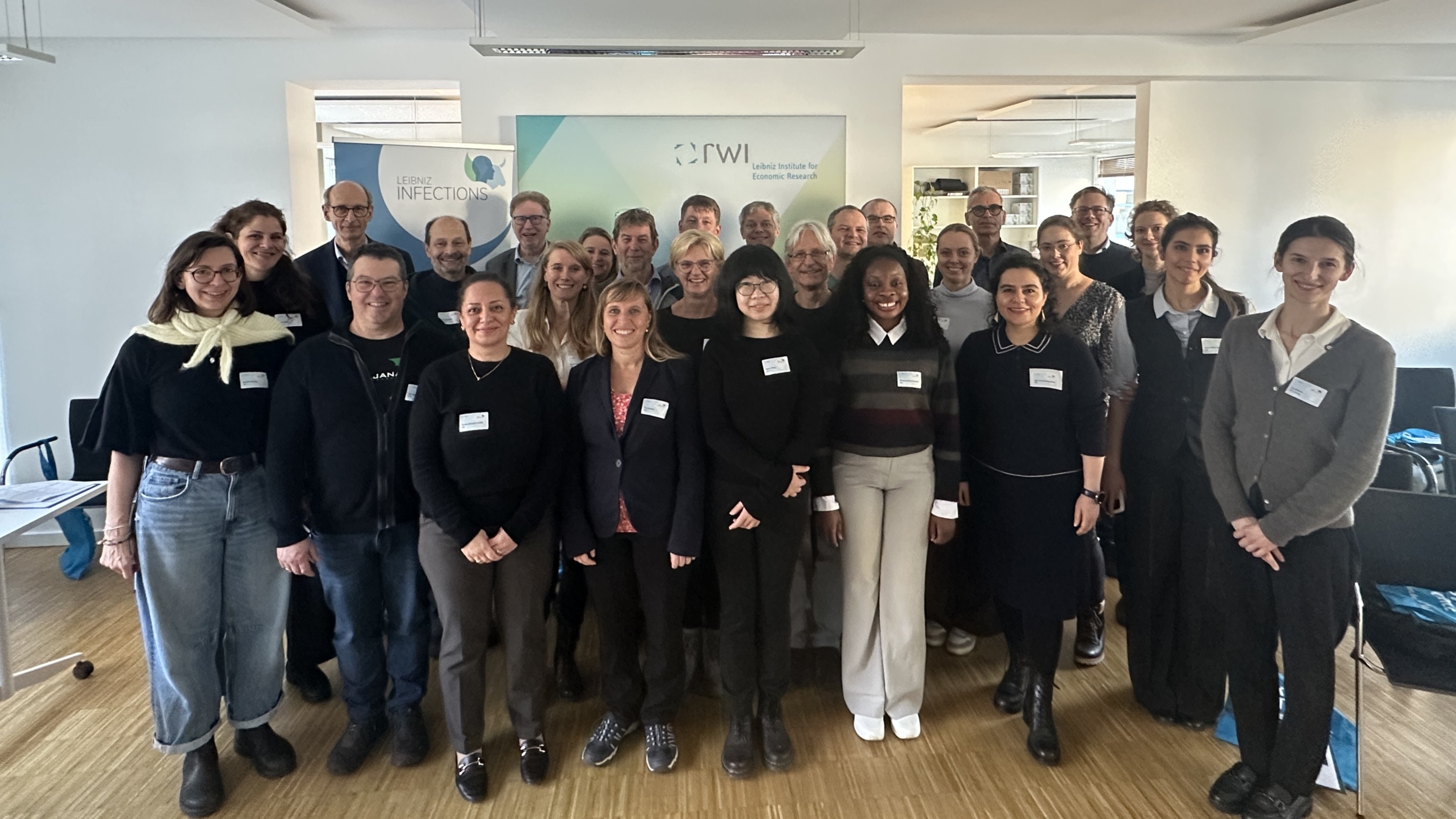
Around 40 members of the research alliance met at the RWI – Leibniz Institute for Economic Research on 12 and 13 November 2026 to discuss project progress, initiate new collaborations and exchange professional views.
The 12th edition of the biannual general assembly of the research alliance Leibniz INFECTIONS once again provided an opportunity to present the progress made on ongoing PhD projects and to discuss their future development together. This time, the event was hosted by the RWI – Leibniz Institute for Economic Research in Essen. Around 40 participants from the various member institutes attended the two-day meeting. The General Assembly was also attended by members of the Scientific Advisory Board: Prof. Dr Michaela Lackner (Medical University of Innsbruck) and Prof. Dr Thomas Berendonk (Dresden University of Technology) attended in person, whilst Prof. Dr Christina Hölzel (Christian-Albrechts-University of Kiel) joined online.
Academic Exchange and Presentation of Doctoral Projects
At the start of the event, the consortium’s spokesperson, Prof. Dr. Thomas Gutsmann of the Research Center Borstel, Leibniz Lung Center, and Prof. Renate Hartwig from the host institute welcomed the participants. The first day of the event focused on project progress. The doctoral candidates presented their work to date and their research findings to the plenary session and answered questions from the consortium members. In the subsequent group sessions, they discussed the projects in smaller groups. During these sessions, the doctoral candidates met with researchers from various institutes to discuss the future direction of their work in terms of content and methodology.
Earlier that morning, Advisory Board member Prof. Dr. Michaela Lackner had led a workshop for the doctoral candidates. Under the title “How to Present Your Data,” the early-career researchers learned how to present their research in a way that is accessible to a general audience. Among other things, they identified technical terms that are not widely known and formulated clear explanations for them. They also used visual aids to illustrate the underlying problem and possible solutions.
New Seed Money Projects
Another item on the agenda was the presentation of the three selected Seed Money projects: SCHIDEV (A multidisciplinary dissection of schistosomiasis-driven protection against dengue virus infection), BHS / P.-falciparum-EVs (Probing tight-junction disruption in a human blood-brain barrier model exposed to pro-inflammatory cytokines and Plasmodium falciparum-derived extracellular vesicles), and PASC (Validating the immunoproteasome as a therapeutic target in post-acute sequelae of SARS-CoV-2 infection). These projects were selected in an internal call for proposals, prevailing over three other applications. A jury had previously evaluated all six applications based on established criteria (interdisciplinarity, originality, and support for early-career researchers) and selected three projects for funding. In addition, associated projects (EU-TULIP, OHIS-Zoo, AMPel, and, newly, Harmony) were presented.
At the closing of the general assembly, the Scientific Advisory Board (SAB) provided an assessment of the consortium’s development and the doctoral projects. Overall, the board members expressed great appreciation for the quality of the presentations and the progress made on the projects. At the same time, they offered recommendations for future work. These included fostering stronger networking among the doctoral candidates themselves and with other experts within the consortium. In the group discussions, the doctoral candidates should also take on a more active and shaping role.
In addition to the scientific program, there was ample time for personal interaction. A group dinner at the Gärtnerei restaurant in Essen rounded out the first day of the event. The general assembly thus once again provided a framework for strengthening cross-institutional collaboration within the research network and discussing the next steps in the joint research.
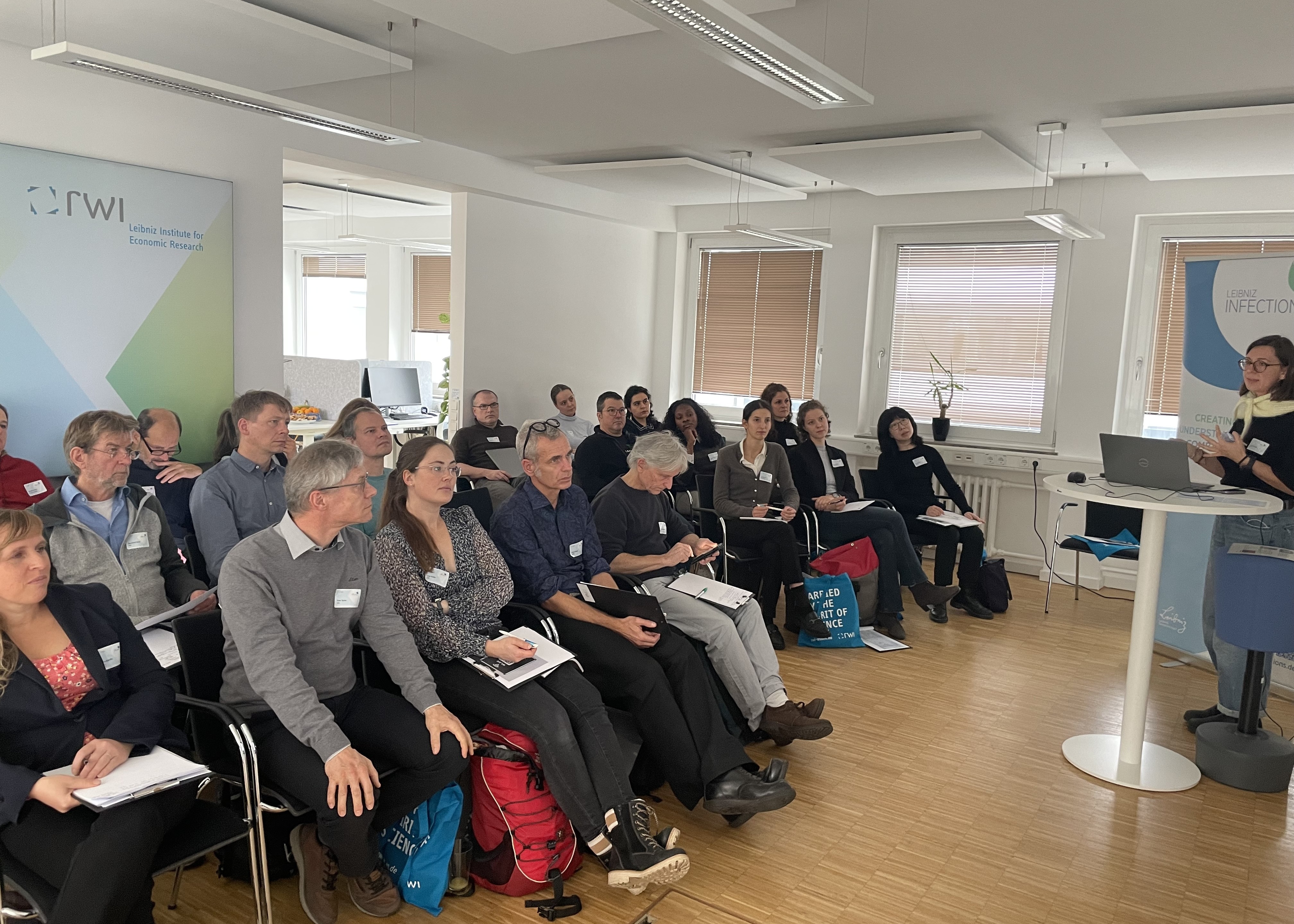 About 40 members of the research alliance Leibniz INFECTIONS met to learn about the progress of the projects and discuss their future direction.
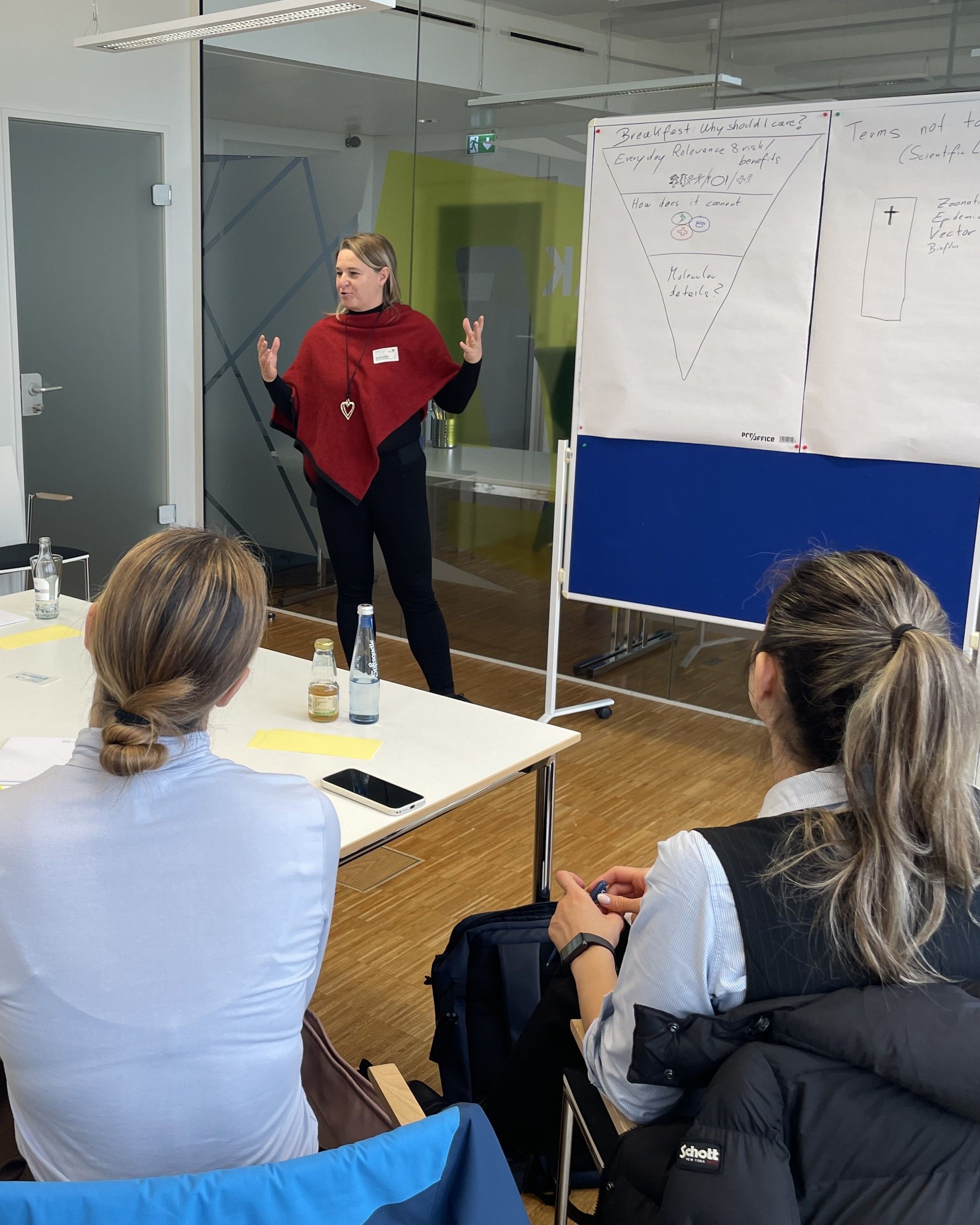 Prof. Dr. Michaela Lackner led the workshop “How to Present Your Data”.
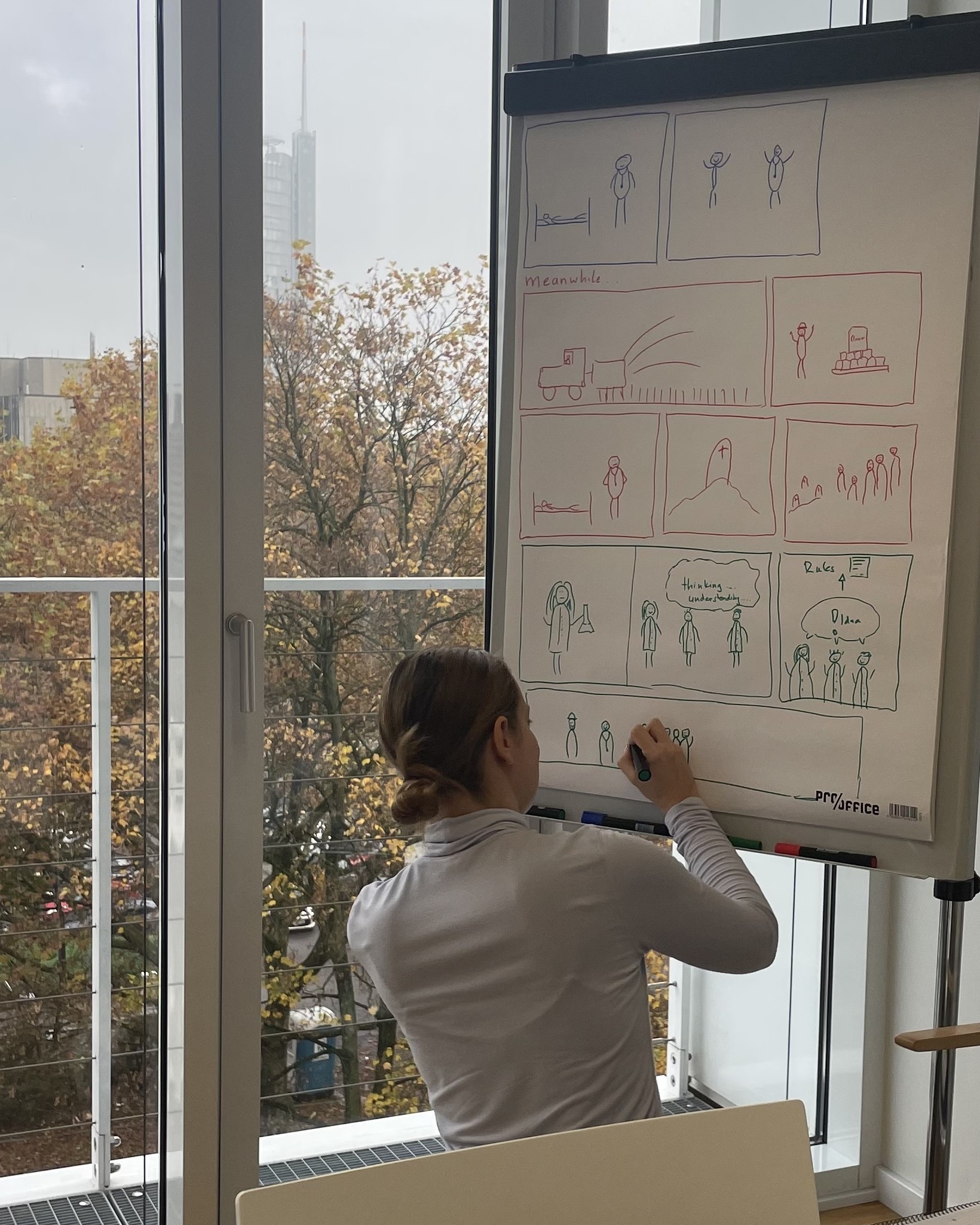 The PhD candidates also got creative in presenting their research.