
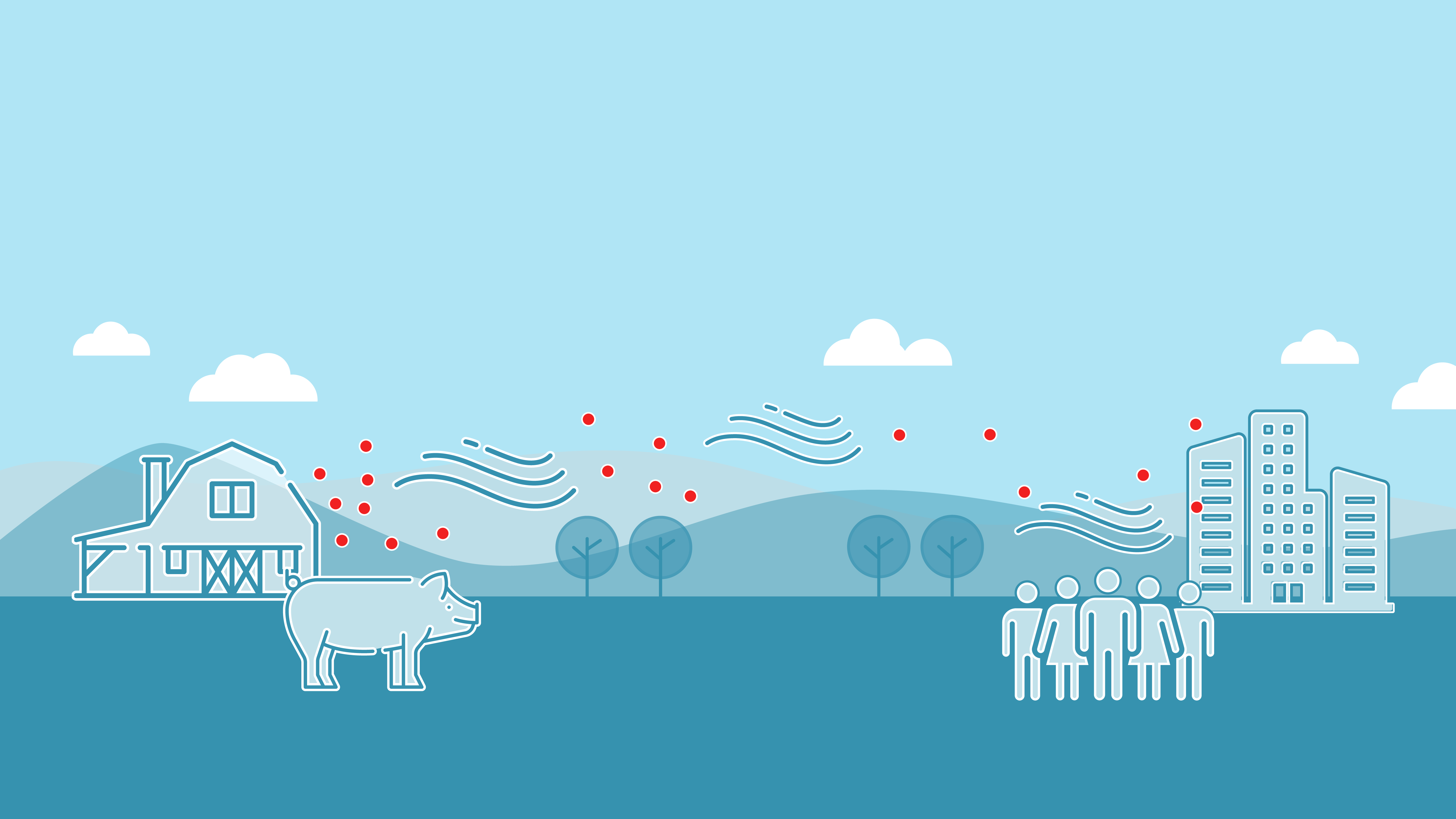
AiRisk, a research network, is investigating a previously overlooked route of transmission for pathogens: dust from livestock farming. The goal is to gain a better understanding of the mechanisms of airborne transmission—which are currently poorly understood—and to develop effective prevention strategies based on these findings.
According to the United Nations Environment Programme, antimicrobial resistance (AMR) is one of the most pressing global environmental challenges. Livestock farming, in particular, is considered a major reservoir for resistant bacteria that can be spread through the air. Despite rising infection and resistance rates, the underlying transmission pathways have so far been inadequately modeled—a gap that hinders effective measures in prevention, surveillance, and crisis response.
This is where AiRisk comes in: The focus is on dust as a potential carrier of pathogens. Dust particles can bind microorganisms, increase their ability to survive in the air, and influence their resistance to disinfectants. This combines the environment, animal husbandry, and human health in line with the One Health approach to better understand the interactions between these areas.
The network pursues several key objectives: First, contaminated dust from agricultural operations, particularly from pig farming, is characterized and investigated as a transmission medium. The data obtained is then incorporated into a diffusion model that simulates the spread of pathogens and enables a risk assessment for humans and the environment. In parallel, intervention measures such as adapted disinfection procedures are developed and tested. Another key focus is on communicating the results clearly to decision-makers, experts, and the general public.
The findings from the project are intended to help federal agencies and emergency response organizations respond more effectively to biological threats. Close collaboration among institutions in the fields of public health, veterinary medicine, and environmental research will also strengthen the foundation for coordinated action in the event of an outbreak.
About AiRisk
The AiRisk network is coordinated by the Robert Koch Institute and will run from April 1, 2026, to March 31, 2031. Participants include the Leibniz Institute for Agricultural Engineering and Bioeconomy, the Research Center Borstel, Leibniz Lung Center, the Leibniz Institute for Tropospheric Research, the University of Hamburg, and the Federal Agency for Technical Relief. The project is funded by the Federal Ministry of Research, Technology, and Space.
Further Information