

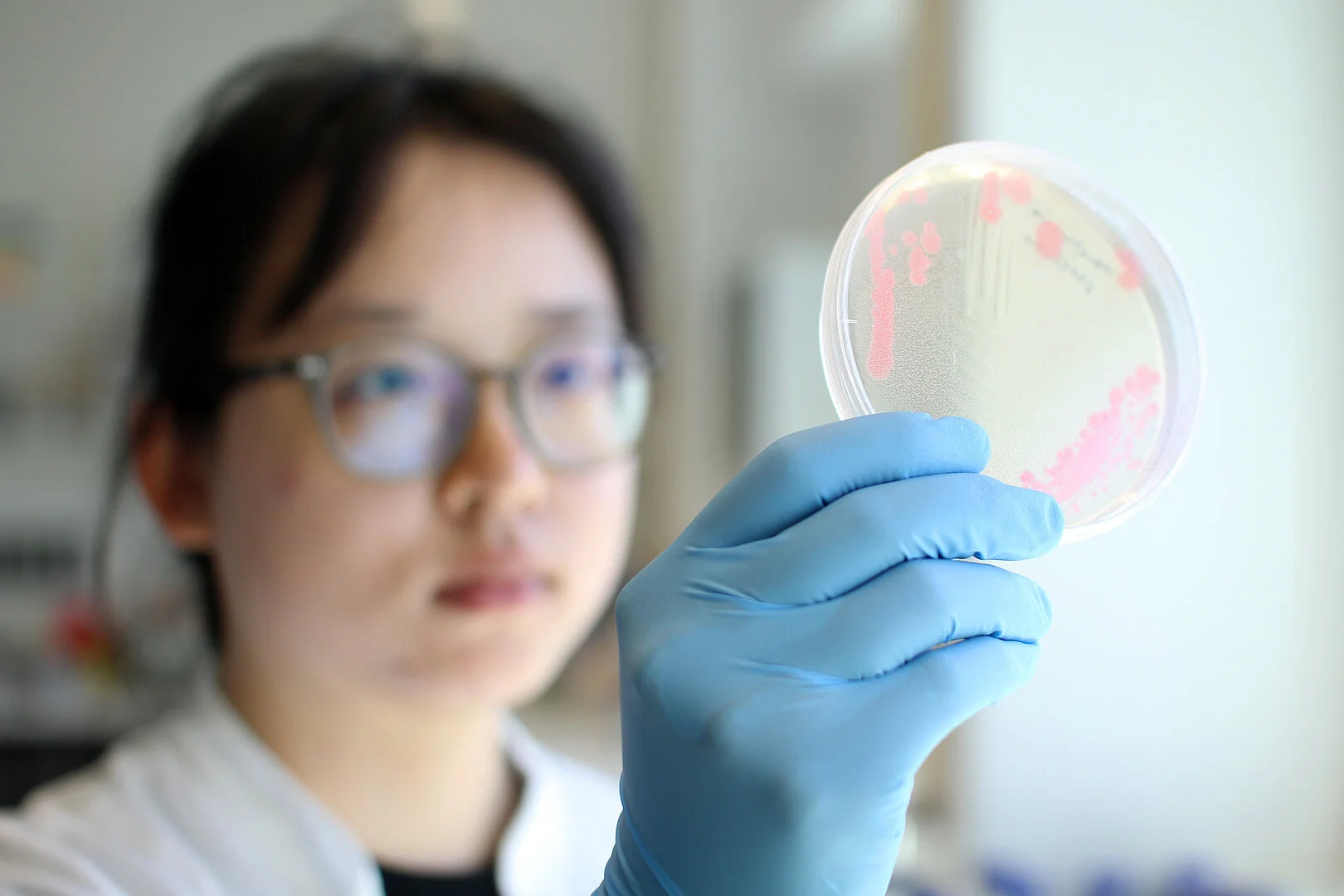
At the new “Leibniz Science Campus: Antimicrobial Resistance Plasticity”, the Research Center Borstel, Leibniz Lung Center is collaborating with Kiel University. The aim is a better understanding of how antibiotic resistance develops in bacteria on a molecular level. Prof. Stefan Niemann from the research alliance Leibniz INFECTIONS will be the future spokesperson for the Science Campus.
A new Leibniz Science Campus is being established in Schleswig-Holstein to address the hot topic antibiotic resistance, as decided by the Senate of the Leibniz Association: The new campus, ‘Plasticity of Antimicrobial Resistance’ (AMR-PLAS), will launch in October 2026 as a collaborative project between the Research Center Borstel, Leibniz Lung Center (FZB), and Kiel University (CAU). The Leibniz Association is supporting the innovative research into antimicrobial resistance (AMR) planned here with funding of around 1.2 million euros over the next four years, with the state of Schleswig-Holstein contributing a further 400,000 euros. Through its Science Campi, the Leibniz Association specifically promotes strategic, thematically focused collaboration between a Leibniz Institute and a neighbouring university in order to strengthen regional priorities such as evolutionary research in the Kiel area.
The aim of the interdisciplinary research project AMR-PLAS is to investigate the genomic and non-genomic plasticity of antibiotic resistance in bacterial pathogens and, based on this, to develop novel and sustainable strategies to combat the worsening antibiotic crisis. AMR plasticity refers to the ability of bacterial strains to adapt to antibiotic treatment through genetic and non-genetic mechanisms and, thanks to these dynamic adaptations, to ensure their survival – which ultimately leads to the spread of antibiotic resistance and an increase in treatment-resistant pathogens. To tackle this challenging task, the new Leibniz Science Campus is creating a unique, interdisciplinary research environment that combines expertise from microbial evolutionary genomics, tuberculosis pathogenomics, evolutionary biology, microbial cell biology, membrane research, data science and infection biology.
“The Leibniz Association’s funding decision validates our research agenda, which positions us, together with Kiel University, at the forefront of the fight against the antibiotic crisis. The new Science Campus focuses on AMR plasticity, a perspective that has received little attention to date but promises great potential in curbing antibiotic resistance, particularly in the case of critical pathogens,” Ulrich E. Schaible, Director of the FZB and spokesperson the Research Alliance Leibniz INFECTIONS.
Global Antibiotic Crisis Set to Reach a Critical Point
Antibiotic resistance has become the focus of a global health crisis: due to the misuse and overuse of antibacterial agents in recent decades, numerous bacteria have now become resistant to antibiotics, including many so-called ‘reserve’ agents used to treat particularly severe cases. In the near future, therefore, we face the threat of a post-antibiotic era in which even harmless infections may no longer be treatable. International and national health organisations have therefore developed numerous countermeasures in recent years, designed, among other things, to optimise the use of existing drugs and promote the development of new ones.
“In doing so, a crucial factor is often overlooked: so-called AMR plasticity, which is based on the rapid evolutionary adaptability of bacterial pathogens. This plasticity, driven by genomic and non-genomic processes, is one of the main drivers of the antibiotic crisis, but has not yet been sufficiently researched,” emphasises Professor Stefan Niemann from the FZB, future spokesperson for the AMR-PLAS Science Campus. “In everyday clinical practice, this often means that resistance in certain pathogens is not initially detected during antibiotic therapy. “This leads to treatment failures, which promote the further spread of highly resistant pathogens and further exacerbate the problem of antibiotic resistance. We therefore aim to deepen our understanding of the plasticity of AMR, particularly in clinically relevant pathogens,” explains CAU Professor Hinrich Schulenburg, deputy spokesperson for the new consortium.
Genomic and non-genomic plasticity as drivers of antibiotic resistance
In the new AMR-PLAS project, researchers in Borstel and Kiel now aim to investigate two fundamental components in particular: genomic and non-genomic AMR plasticity. The first refers to the rapid emergence and transmission of resistance through the genome’s ability to change extremely quickly in certain areas. Non-genomic AMR plasticity – that is, the ability of bacterial populations to resist antibiotic treatments through adaptations such as changes in the structure of the cell membrane – is also to be investigated in greater detail at the new Science Campus.
Overall, the new Science Campus aims to expand our understanding of AMR plasticity in the future, focusing in particular on clinically relevant pathogens, specifically so-called ESKAPE pathogens – for example, from the genera Enterococcus, Staphylococcus and Pseudomonas – and the tuberculosis pathogen Mycobacterium tuberculosis. The researchers from Kiel and Borstel intend to analyse the findings using bioinformatics, statistics and artificial intelligence, and, in the medium term, to build on this to develop new methods for AMR management in everyday clinical practice. Overall, this is expected to lead to improved diagnostic tools and strategies for reducing and preventing antibiotic resistance.
Further information
Press release (in German) from the Leibniz Association dated 25 March 2026
Press release (in German) from the Research Center Borstel dated 25 March 2026
 Prof. Stefan Niemann from the FZB and Prof. Hinrich Schulenburg from the CAU will lead the new joint AMR-PLAS Science Campus. © Gunnar Dethlefsen/EvoLUNG