

On today's World Tuberculosis Day, a new episode of the podcast ‘Mikroben im Visier’ is out. Tuberculosis expert Prof. Christoph Lange provides detailed insights into current research and the challenges of the global fight against TB, and explains why the world’s deadliest infectious disease persists despite modern medicine.
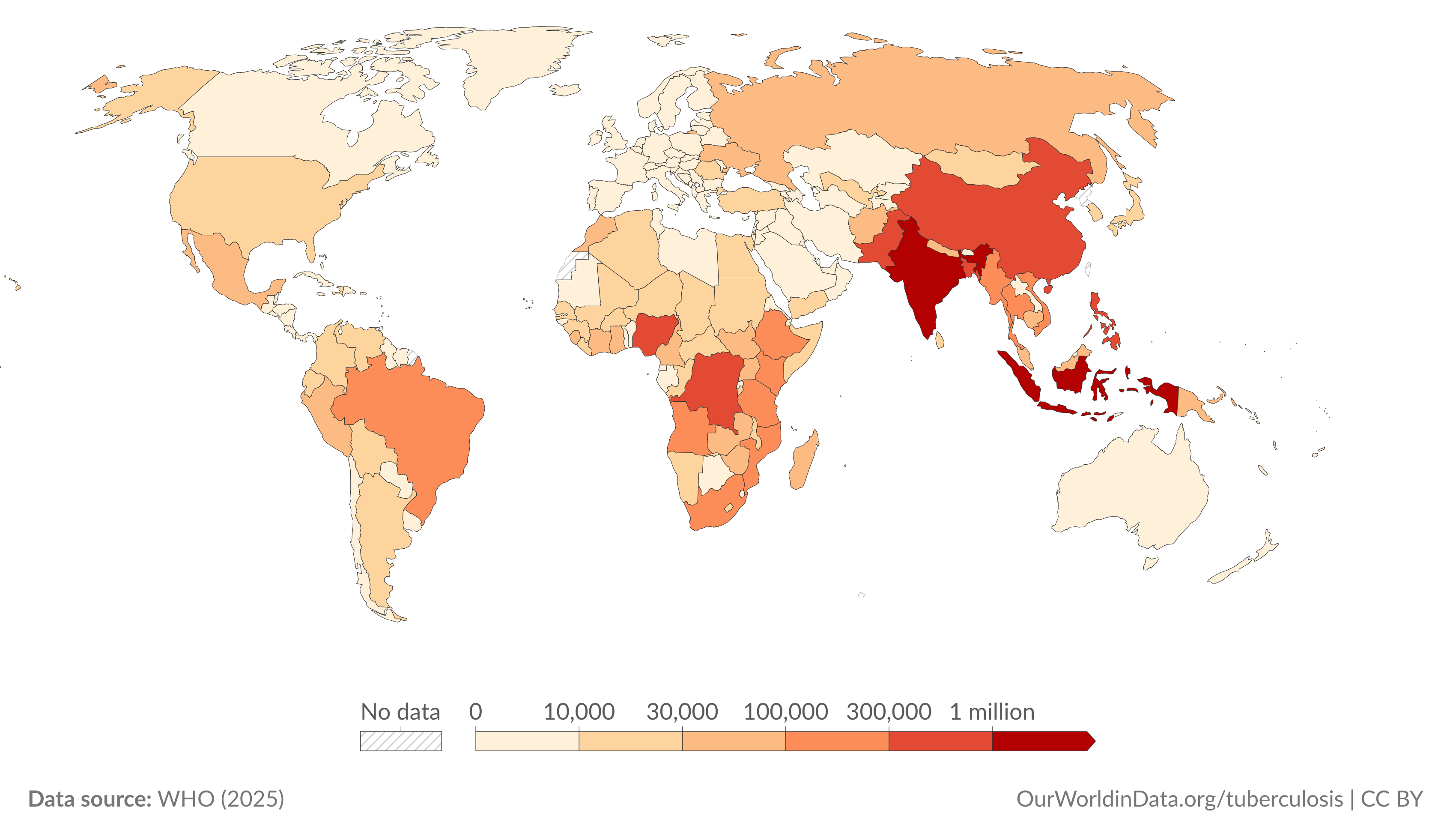
Tuberculosis (TB) is one of the oldest known infectious diseases, yet it remains highly relevant today. Despite modern medicine, case numbers remain at a very high level: according to estimates, 10.7 million people worldwide contracted tuberculosis in 2024; more than 1.2 million died from it. Countries in South-East Asia and Africa are particularly hard hit. This means it remains the most common fatal infectious disease caused by a single pathogen. To mark World Tuberculosis Day on 24 March, a new episode of the science podcast “Mikroben im Visier“ is dedicated to this global challenge. The guest is pulmonologist, Infectious disease specialist and tuberculosis expert Professor Christoph Lange, Medical Director of the Research Center Borstel, Leibniz Lung Center.
The pathogen hides in the body
Tuberculosis is caused by the bacterium Mycobacterium tuberculosis. It is transmitted through the air, usually via coughing or sneezing by infected individuals. “When someone coughs, tiny droplets are produced that can remain suspended in the air for a long time,” explains Lange. Many infections go unnoticed at first. According to estimates, around a quarter of the world’s population comes into contact with the pathogen, but only 5 to 10 per cent develop active disease.
One reason why the disease is so difficult to control is the bacteria’s ability to remain in the body for long periods. The immune system often encapsulates the pathogens in what are known as granulomas. “It is highly likely that the bacteria can survive in the human body for a lifetime,” explains Prof. Lange. These latent infections can become active again at any time if the immune system is no longer able to keep the pathogens under control.
Poverty and war drive tuberculosis
On World Tuberculosis Day, Lange emphasises that tuberculosis is far more than a purely medical problem. Malnutrition is considered the main risk factor worldwide, followed by diabetes, smoking, alcohol dependence and HIV infections. “The crucial factor is the gap between rich and poor, the difference between having access to the healthcare system and having none,” says Lange.
The Russian war of aggression against Ukraine illustrates just how significant political and social impacts are. Within two years of the Russian invasion, the incidence of tuberculosis in Ukraine rose significantly, having declined markedly over the previous ten years. Furthermore, multidrug-resistant tuberculosis strains are playing an increasingly prominent role. These strains are resistant to key standard medications and are significantly more difficult to treat. In some regions of Eastern Europe, such as Russia, this accounts for up to half of all cases.
Research alone is not enough
Researchers around the world, including members of the research alliance Leibniz INFECTIONS, are working on new vaccines, drugs and diagnostic methods. 17 vaccine candidates are in development, 20 drugs are in clinical trials, and there are also new diagnostic approaches. Despite this progress, tuberculosis remains a complex challenge. “We may have the best medicines and vaccines,” says Lange. “But the social factors are so powerful that research alone is not enough.” His conclusion: “We will only be able to successfully combat tuberculosis if there is greater justice, prosperity and security in the world.”
https://mikroben-im-visier.podigee.io/12-neue-episode
 Tuberculosis expert Professor Christoph Lange is Medical Director of the Research Centre Borstel, Leibniz Lung Centre © Kerstin Pukall/FZB
 The podcast "Mikroben im Visier. Infektionen verstehen, Resistenzen besiegen!" (in German) is available on all common podcast platforms. Click here to go directly to the twelfth episode.